ENG
ENG UA
UA



Modern steel
Modern steel is a high-tech material that combines strength, durability and flexibility in use. Thanks to constant research and improvement of production processes, steel today is adapted to the highest requirements of construction, industry and mechanical engineering. Let’s consider which steel is better suited for different tasks, which is better and alternatives.
Obsolete steels and their modern alternative
Steels such as S255, S355, A36, 50, A514 and SS400 have long been used in many industries due to their strength, affordability and versatility. They were widely used in construction, mechanical engineering, equipment manufacturing and other fields. However, with the increase in requirements for materials and innovations in the production of metals, these steels begin to lose their relevance and are gradually replaced by more modern and efficient solutions.
The main reason for their gradual withdrawal into the background is the limitation in properties. For example, steels such as S255 and S355 show insufficient wear resistance under harsh operating conditions, which limits their use for parts that are subject to intense abrasion or shock loads. The situation is similar with A36 and SS400, which, although providing sufficient strength, cannot compete with modern wear-resistant steels such as Hardox 400.
Hardox 400 acts as one of the most effective alternatives for outdated steel brands. This high-quality wear-resistant steel has superior strength and durability characteristics, making it an ideal choice for extreme operating conditions. Hardox 400 is used for the production of excavator buckets, machine parts, industrial elements and other products that require high wear resistance. In addition, its high impact toughness and strength significantly reduce maintenance and replacement costs, providing long-term economic benefits.
Properties of modern steel
- Strength. Steel exhibits high tensile, compressive, and bending strength, which allows it to be used in structures that are subject to significant loads.
- Rigidity. Steel has a high Young’s modulus, which ensures low deformation under load.
- Plasticity. Some types of steel can be deformed without breaking, which allows you to give them the desired shape.
- Hardness. Depending on the composition and heat treatment, steel can have a different level of hardness, which makes it resistant to wear.
- Viscosity. This property determines the steel’s ability to withstand impacts and sudden loads.
- Density. Steel has a relatively high density, making it a heavier material compared to some other metals.
- Thermal conductivity: Steel conducts heat well, which must be taken into account when designing heat exchangers and other devices.
- Magnetic properties: Most steels have magnetic properties, which allows them to be used in electrical engineering.
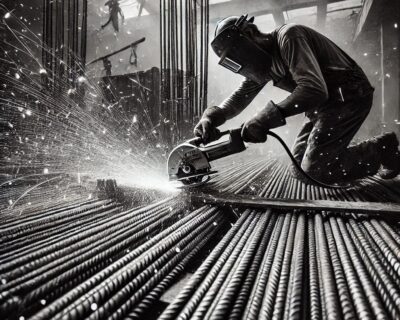
The special properties of modern steel make it indispensable in many areas. Due to alloying with chromium and nickel, the steel receives high corrosion resistance. Heat-resistant steels are able to work at high temperatures without losing strength, and heat-resistant steels retain their properties even with prolonged heating. Many types of steel are easily welded, which allows you to create complex structures, and also lend themselves well to cutting, providing high precision and convenience in production.
Hardox 400 – what kind of steel is it and what makes it better
Hardox 400 is a high-quality wear-resistant steel widely used in industry. It is known for its strength and resistance to mechanical damage, which makes it an ideal choice for extreme operating conditions.
- Durability. Due to its dense structure, this steel withstands intense abrasion, which is important for parts that work under constant friction.
- High strength. Hardox 400 retains its shape even under significant mechanical loads.
- Flexibility in use. Suitable for making excavator buckets, machine parts, building frames and other equipment.
The question “what to replace Hardox 400?” often occurs in those looking for an alternative due to cost or specific needs. Alternatives may be other types of wear-resistant steel, but Hardox 400 remains the leader due to its combination of quality and reliability.